

‘Free money for all?’ Elon Musk says AI could force governments to pay citizens soon!
Nancy Jaiswal | Apr 17, 2026, 12:29 IST
Elon Musk has proposed universal high income funded by governments as AI and robotics reshape jobs, arguing increased production from machines could offset inflation while policymakers struggle to match the speed of technological change.

Image credit : Indiatimes | Elon Musk backs ‘free money’ as AI threatens jobs
Elon Musk has reignited debate around automation and employment, stating that governments may need to provide direct financial support to citizens as artificial intelligence begins to replace human work at scale. In a recent post, he described “universal high income” through government-issued payments as a practical response to rising unemployment driven by AI and robotics.
Musk outlines
Musk argued that direct payments from governments could help offset job displacement caused by automation. He stated that “universal HIGH INCOME via checks issued by the Federal government is the best way to deal with unemployment caused by AI.”
![Elon Musk has proposed universal high income funded by governments as AI and robotics reshape jobs]() He also addressed concerns around inflation, suggesting that increased production from robots could stabilise prices. According to him, if AI and machines significantly boost the supply of goods and services, the impact of more money entering the economy may be limited.
He also addressed concerns around inflation, suggesting that increased production from robots could stabilise prices. According to him, if AI and machines significantly boost the supply of goods and services, the impact of more money entering the economy may be limited.
Speaking in a podcast with Peter H. Diamandis, Musk emphasised the speed at which AI is evolving. He stated that technological development may be advancing “10 times faster than government, maybe more,” making it difficult for policymakers to respond effectively.
During the same discussion, Dave Blundin highlighted that existing government systems are not equipped to handle such rapid change. He noted that even regulatory frameworks may fall short in addressing the broader economic consequences of AI adoption.
![Elon Musk has reignited debate around automation and employment]() Musk suggested that instead of attempting to slow or fully control AI development, governments could prioritise economic stability by sending money directly to citizens.
Musk suggested that instead of attempting to slow or fully control AI development, governments could prioritise economic stability by sending money directly to citizens.
To support his argument, Musk pointed to earlier instances of government-issued payments. He referenced stimulus checks distributed during the COVID-19 period, as well as a $1,776 payout to US military personnel during the tenure of Donald Trump.
These examples, he indicated, show that direct financial transfers are not without precedent, even if scaling such a system for long-term use would be more complex.
At the same time, Musk acknowledged that key questions remain unresolved, including eligibility criteria, payment levels, and the sustainability of such a model over time.
Beyond labour markets, Musk also discussed the broader implications of AI, particularly in healthcare. He pointed to the current shortage of highly trained doctors and surgeons, noting that training requires significant time and cost.
He suggested that AI-powered humanoid robots, such as Tesla’s Optimus, could eventually outperform top surgeons within the next few years. This, he argued, could improve access to high-quality healthcare globally.
Musk attributed this rapid progress to multiple factors advancing simultaneously, including improvements in AI models, faster computing chips, and enhanced mechanical systems. Together, these developments are accelerating robotics at an unusually fast pace.
Musk also rejected the idea that a single, dominant AI system will control the future. Instead, he suggested that multiple AI systems will operate at the same time.
![Musk argued that direct payments from governments could help offset job displacement]() He cited physical constraints, such as the limits on how quickly information can be transferred, as a reason why intelligence is more likely to remain distributed rather than centralised in one system.
He cited physical constraints, such as the limits on how quickly information can be transferred, as a reason why intelligence is more likely to remain distributed rather than centralised in one system.
Musk’s proposal reflects growing concern over AI’s economic impact, positioning direct government payments as a potential fallback in a rapidly evolving technological landscape.
Musk outlines universal income as response to AI-driven job losses
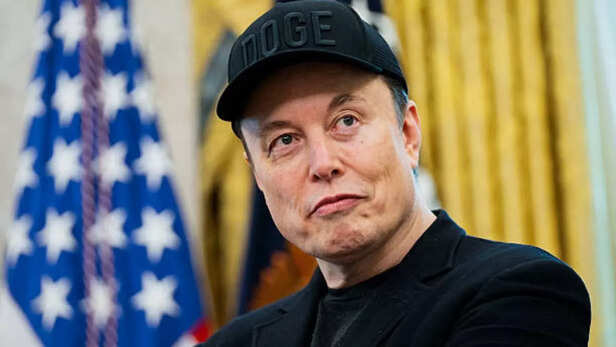
Image credit : X/ElonMuskPDA | Elon Musk has proposed universal high income funded by governments as AI and robotics reshape jobs
Rapid AI growth outpacing governments raises policy concerns
During the same discussion, Dave Blundin highlighted that existing government systems are not equipped to handle such rapid change. He noted that even regulatory frameworks may fall short in addressing the broader economic consequences of AI adoption.
Image credit : X/ElonMuskPDA | Elon Musk has reignited debate around automation and employment
Past examples cited as precedent for direct payments
These examples, he indicated, show that direct financial transfers are not without precedent, even if scaling such a system for long-term use would be more complex.
At the same time, Musk acknowledged that key questions remain unresolved, including eligibility criteria, payment levels, and the sustainability of such a model over time.
AI advancements could transform industries beyond employment
He suggested that AI-powered humanoid robots, such as Tesla’s Optimus, could eventually outperform top surgeons within the next few years. This, he argued, could improve access to high-quality healthcare globally.
Musk attributed this rapid progress to multiple factors advancing simultaneously, including improvements in AI models, faster computing chips, and enhanced mechanical systems. Together, these developments are accelerating robotics at an unusually fast pace.
Distributed AI systems likely instead of single dominant intelligence

Image credit : X/ElonMuskPDA | Musk argued that direct payments from governments could help offset job displacement
Musk’s proposal reflects growing concern over AI’s economic impact, positioning direct government payments as a potential fallback in a rapidly evolving technological landscape.

Trump hints at Pakistan visit if Iran deal is signed
By Nancy Jaiswal

Elon Musk confirms more Tesla Diners expansion plan
By Nancy Jaiswal

The viral Savory Girl snack plate trend explained
By Saloni Jha

How Gen Z’s love language became a new vocabulary of flirting
By Saloni Jha

Who is Tesfaye Cooper? Facebook Live torture convict back in custody after brutal Chicago cyclist assault and robbery case
By Nillohit Bagchi

Virat Kohli's 'like' on influencer LizLaz's photo sparks reactions
By Karen Noronha

MS Dhoni spotted in Hyderabad before CSK vs SRH clash, sparking return speculation
By Simran Guleria


