

Strait of Hormuz shocker: Trump orders US Navy blockade—Can Iran’s oil grip trigger a global price explosion? Here’s what we know
Nancy Jaiswal | Apr 13, 2026, 12:34 IST
Donald Trump has ordered a US Navy-led blockade process in the Strait of Hormuz, targeting Iran’s control over the key oil route. The move comes amid rising oil prices, disrupted shipping, and growing pressure on global energy markets and supply chains.

Image credit : Indiatimes | Trump orders Hormuz blockade as oil prices surge
US President Donald Trump has announced that the United States will begin a process to block access to the Strait of Hormuz, a key global oil route that has already been restricted by Iran since the start of the Middle East conflict. The development signals an escalation in efforts to counter Tehran’s control over the passage, which carries a significant share of global energy supplies.
Trump said the US Navy would begin blocking ships entering or leaving the strait. He stated that the goal remains to restore unrestricted movement, but added that Iran has not allowed that situation to return.
The US military’s regional command, US Central Command, said the blockade process would begin at a specified time and would apply to vessels linked to Iranian ports and coastal areas. However, ships travelling between non-Iranian ports would still be allowed to pass, indicating a narrower scope than initially suggested.
![Donald Trump has ordered a US Navy-led blockade process in the Strait of Hormuz]() The Strait of Hormuz is one of the world’s most important energy corridors, handling roughly 20 per cent of global seaborne oil and natural gas flows. Iran’s control over the passage has disrupted supply chains and contributed to rising oil prices globally, including in the United States.
The Strait of Hormuz is one of the world’s most important energy corridors, handling roughly 20 per cent of global seaborne oil and natural gas flows. Iran’s control over the passage has disrupted supply chains and contributed to rising oil prices globally, including in the United States.
While Iran has permitted limited movement since March, some ships have reportedly been allowed through without charge, while others paid fees. Tehran has also used threats, including claims that the strait may be mined, to influence global markets and apply pressure on Washington.
Iran has continued exporting oil despite the conflict, with data from Kpler showing exports averaging 1.85 million barrels per day in March higher than previous months. Much of this movement has prioritised Iranian oil shipments.
![US President Donald Trump ]() A US blockade could reduce Iran’s oil exports and revenue, potentially weakening its ability to sustain long-term military activity. However, the US has so far avoided fully restricting Iranian oil flows due to concerns that such action would drive global oil prices even higher.
A US blockade could reduce Iran’s oil exports and revenue, potentially weakening its ability to sustain long-term military activity. However, the US has so far avoided fully restricting Iranian oil flows due to concerns that such action would drive global oil prices even higher.
In fact, Washington had earlier eased some restrictions, allowing Iran to sell oil stored on tankers. Analysts have argued that stricter measures could force Iran to scale back its actions.
Robin J Brooks of the Brookings Institution said limiting Iran’s oil exports could significantly impact its economy, adding that such a move could “collapse Iran’s business model.”
Iranian officials have indicated they are not overly concerned. Parliament Speaker Mohammad Bagher Ghalibaf commented that rising fuel prices could worsen, suggesting that consumers may soon see higher costs than current levels.
Shipping activity has already slowed. Normally, about 150 vessels pass through the strait daily, but recent data from S&P Global Market Intelligence shows a sharp drop in traffic, with only around that number transiting over an entire month in March.
Some ships that did pass reportedly coordinated with Iranian authorities and may have paid fees for safe passage.
Energy markets reacted quickly to the blockade announcement. US crude prices rose by 8 per cent to $104.24 per barrel, while Brent crude increased by 7 per cent to $102.29. Before the conflict began in late February, Brent crude was priced at around $70 per barrel.
![Trump said the US Navy would begin blocking ships entering or leaving the strait]() The situation highlights the global dependence on the Strait of Hormuz and the risks associated with disruptions in the region. Any further escalation could tighten supply and continue pushing prices higher.
The situation highlights the global dependence on the Strait of Hormuz and the risks associated with disruptions in the region. Any further escalation could tighten supply and continue pushing prices higher.
The US move to begin a blockade process in the Strait of Hormuz marks a significant escalation in tensions with Iran. While aimed at countering Tehran’s control over the route, the strategy carries risks for global energy markets. The balance between limiting Iran’s influence and stabilising oil prices remains central to the unfolding situation.
Trump said the US Navy would begin blocking ships entering or leaving the strait. He stated that the goal remains to restore unrestricted movement, but added that Iran has not allowed that situation to return.
How the US blockade will be enforced
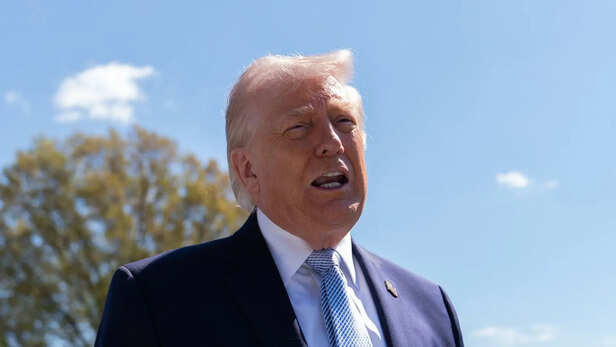
Image credit : X/Maga_Trigger | Donald Trump has ordered a US Navy-led blockade process in the Strait of Hormuz
Why The Strait of Hormuz matters
While Iran has permitted limited movement since March, some ships have reportedly been allowed through without charge, while others paid fees. Tehran has also used threats, including claims that the strait may be mined, to influence global markets and apply pressure on Washington.
Economic strategy behind the US move
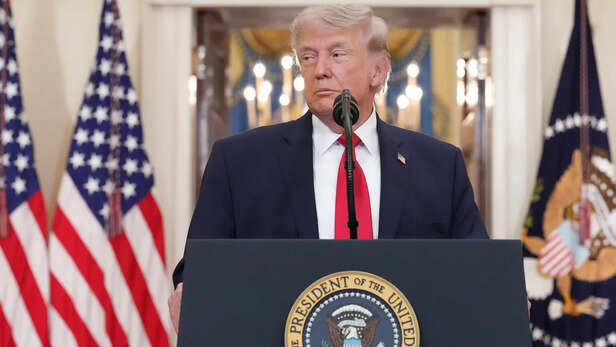
Image credit : X/Maga_Trigger | US President Donald Trump
In fact, Washington had earlier eased some restrictions, allowing Iran to sell oil stored on tankers. Analysts have argued that stricter measures could force Iran to scale back its actions.
Robin J Brooks of the Brookings Institution said limiting Iran’s oil exports could significantly impact its economy, adding that such a move could “collapse Iran’s business model.”
Iran’s response and market reactions
Shipping activity has already slowed. Normally, about 150 vessels pass through the strait daily, but recent data from S&P Global Market Intelligence shows a sharp drop in traffic, with only around that number transiting over an entire month in March.
Some ships that did pass reportedly coordinated with Iranian authorities and may have paid fees for safe passage.
Impact on oil prices and global supply
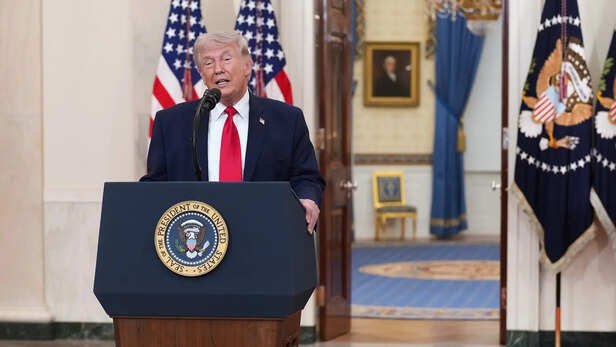
Image credit : X/Maga_Trigger | Trump said the US Navy would begin blocking ships entering or leaving the strait
The US move to begin a blockade process in the Strait of Hormuz marks a significant escalation in tensions with Iran. While aimed at countering Tehran’s control over the route, the strategy carries risks for global energy markets. The balance between limiting Iran’s influence and stabilising oil prices remains central to the unfolding situation.

Why every DIY outfit at Coachella looked the same
By Saloni Jha

Imagine walking through a chocolate world, Switzerland is making it happen
By Sneha Kumari

Elon Musk claims covid mild, vaccine reaction severe
By Nancy Jaiswal

Katy Perry’s joke steals Bieber’s Coachella moment
By Nancy Jaiswal

This simple Japanese Walking trend is actually a full-body workout
By Sneha Kumari

How ‘Desicore’ is taking over Coachella 2026
By Saloni Jha

When Justin Bieber sang 'Baby,' Coachella felt like home again
By Iraa Paul


